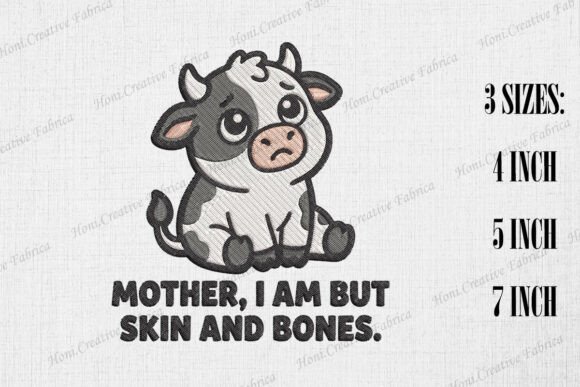
Funny Chubby Cow: A Craft Fair Design Review
As I set up my weekend craft fair booth, the pressure to curate a collection that stops people in their tracks is real. The table needs to tell a story before a single conversation happens. Today, I am reviewing a new machine embroidery design titled Funny Chubby Cow. This piece has landed in my queue for the Nursery and general home decor categories, but its potential extends far beyond just baby items. Before I commit hours of machine time to turning this digital file into a sellable handmade product, I need to evaluate its visual impact, production feasibility, and market appeal.
First Impressions: Bold, Rustic, and Undeniably Cute
The moment I open the preview for Funny Chubby Cow, the vibe is clear. It is not an elegant, minimalist silhouette, nor is it a hyper-realistic portrait. Instead, it leans heavily into the "farmhouse chic" and whimsical aesthetic that dominates current handmade markets. The title suggests a character with personality—round, approachable, and humorous. For a craft fair crowd looking for something unique for a nursery or a quirky kitchen gift, this design hits the sweet spot between cute and funny.
In a sea of generic floral patterns and standard monograms, a chubby cow stands out. It feels modern yet rustic, perfect for the demographic that loves vintage-inspired aprons, cozy tea towels, and playful nursery accents. The design does not feel premium in a luxury sense; rather, it feels accessible and fun, which often translates to higher impulse buys at a booth or a quick sale on Etsy.
Evaluating Product Applications for Maximum Sales
When deciding how to monetize a specific embroidery file, I always ask: where does this design shine? Based on the description stating it works on clothes, onesies, tablecloths, and more, here is my breakdown of the best applications for Funny Chubby Cow.
- Tote Bags and Market Bags: This is likely the highest volume seller. A large-scale application on a canvas tote bag creates a bold statement piece. The rounded shape of the cow fits well within the center of a bag without getting lost in folds.
- Kitchen Textiles: Apron embroidery and tea towel embroidery are massive categories. Placing this design on a flour sack towel or a sturdy cotton apron adds a touch of humor to the kitchen. It appeals to the "country kitchen" lover.
- Baby Onesies and Nursery Decor: While categorized under Nursery, this design works exceptionally well as a gender-neutral option. A small accent on a onesie sleeve or a larger focal point on a pillow cover makes for an adorable gift.
- Embroidered Patches: Creating patches allows for versatility. Customers can iron them onto denim jackets, backpacks, or hats. This is a low-risk way to test the design before committing to full garment embroidery.
- Caps and Hats: Curved surfaces can be tricky, but the simple, rounded nature of a chubby cow should translate well to the front panel of a baseball cap.
Production Realities: Stitch Density and Fabric Texture
While the concept is strong, the execution determines whether this becomes a profitable craft fair product or a frustrating experiment. As a designer, I must consider the technical aspects of the digital embroidery file.
One critical factor is stitch density. Designs labeled as "chubby" often rely on fill stitches to create volume. If the density is too high, the fabric may pucker, especially on lightweight materials like linen or thin cotton used for tea towels. Conversely, if the density is too low, the colors may show through, making the cow look patchy. I will need to run a test on scrap fabric to ensure the backing stabilizer supports the weight of the design.
Fabric texture is another variable. Embroidering on thick terry cloth towels requires different tension settings than smooth quilting cotton. The raised loops of a towel can sometimes swallow tiny details. Since Funny Chubby Cow appears to be a character design, I must ensure that facial features like eyes or smiles do not get lost in the texture of the fabric. If the design includes fine lines or small lettering, scaling it down for a pocket or a hat might result in illegible or muddy stitching.
Practical Tips for Small Shop Owners
For fellow Etsy sellers and boutique makers planning to use this design, here are my essential notes for successful production:
- Test on Scrap First: Never skip the test run. Check how the thread colors pop against your chosen fabric. A dark brown cow on a dark green background might disappear, while white thread on navy blue could be stunning.
- Check Hoop Size: Ensure your hoop accommodates the full design. If you have to stitch in sections, alignment can become a nightmare during batch production.
- Use the Right Stabilizer: For items like caps or stretchy fabrics, a cutaway stabilizer is non-negotiable to prevent distortion. For heavy towels, a tear-away might suffice, but test thoroughly.
- Create Real Mockups: Do not rely solely on software previews. Embroider one sample and photograph it in natural light. This printable mockup or real photo is crucial for your online listings to manage customer expectations.
- Verify Licensing: Before selling any finished products, confirm the commercial licensing terms of the embroidery design. Some files allow unlimited sales, while others restrict the number of items you can produce.
Visual Appeal and Customer Engagement
The ultimate goal of any small shop product is to engage the buyer. Funny Chubby Cow has a distinct advantage: it evokes emotion. When a customer sees a cute, round cow on a tote bag, they smile. That micro-moment of joy is what drives sales at a craft fair. It transforms a utilitarian item into a conversation starter.
For brand consistency, this design fits perfectly into shops that focus on farmhouse decor, family gifts, or playful nursery items. It adds a layer of personality that mass-produced goods lack. However, it is vital to maintain quality control. If the stitching is sloppy or the design is distorted, the charm is lost, and the perceived value drops.
Photographing these items for online listings is also easier when the design has a clear focal point. The cow's shape is distinct, making it easy to frame in a photo without needing complex styling. This clarity helps customers understand exactly what they are buying, reducing return rates and increasing satisfaction.
Final Verdict for the Handmade Market
Is Funny Chubby Cow worth adding to your production line? Absolutely, provided you respect the technical requirements of machine embroidery. It is a versatile asset that bridges the gap between nursery essentials and home decor. Its playful nature makes it a standout piece in a booth display, drawing attention away from competitors.
Whether you are creating a batch of embroidered patches for a quick flip, designing custom aprons for a local kitchenware store, or building a line of nursery pillows, this design offers strong potential. Just remember to check your hoop size, adjust your thread colors for maximum contrast, and always prioritize the quality of the finished product. With careful execution, Funny Chubby Cow can become a signature item that keeps customers coming back to your shop for more.